Blocking Corporate Harm, Uplifting Community Solutions – Report from a Learning Exchange in Zimbabwe
Rafaela Rodriguez, our Director of Community Partnerships, recently traveled to Zimbabwe as part of her Legal Empowerment Learning Lab held by the Bernstein Institute at NYU Law. This Learning Lab brings together human rights practitioners from across the globe to learn from each other’s work and share tools and best practices on how to empower communities in knowing their rights and shaping how those rights become real.
Read below in her own words the importance of this learning exchange across movements and countries, and parallels that emerge when we bridge across sectors to learn how to work with, empower, and win alongside communities fighting for justice.

After close to 48 hours of travel, I arrived in Harare to meet with sixteen legal empowerment practitioners from 10 countries. We had all met over Zoom for over a year, exchanging stories and practical exercises we could implement across our movements to make rights real for our communities. From afro-indigenous communities in Colombia fighting for their land rights, to people navigating and reshaping the U.S. legal system, and informal workers demanding protections as they keep the streets of Mexico City free of waste, we were bound by the common understanding that community-driven solutions are critical to imagining a more just future.
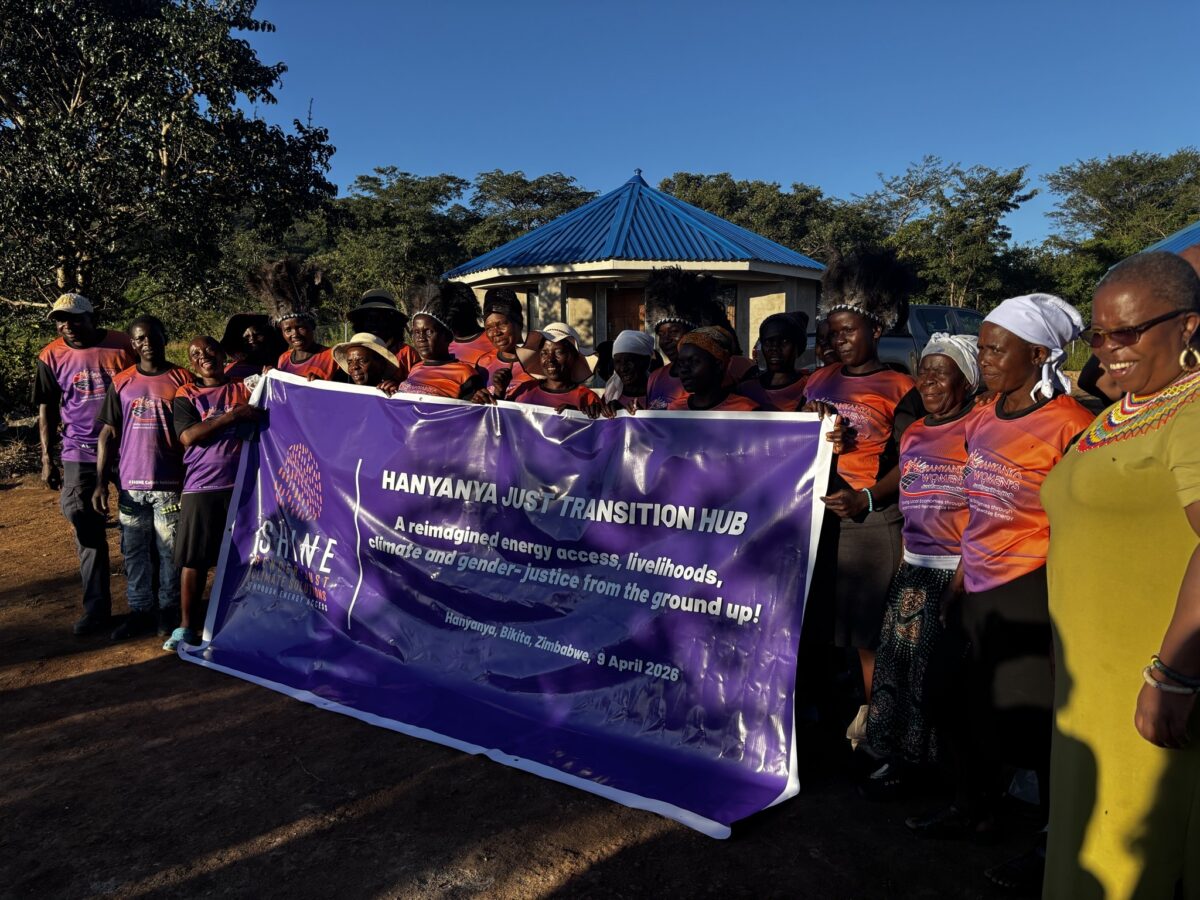
Our host was the SHINE Collaborative, who has worked to empower women across Africa and the Global South and bring gender-just solutions at the intersection of energy access, climate resilience, and community power. We visited the Hanyanya community a few hours from Harare, to have a learning exchange with them as they prepare to prevent a mining company from destroying their lithium-rich land.

As someone who has spent almost a decade strategizing on how to hold corporations accountable for harms to workers, this exchange felt critical to seeing the similarities between the labor movement and the environmental/just-transition movement across the globe.
We are both working on dismantling extractive systems, where labor exploitation and land exploitation often go hand in hand. We are similarly nurturing regenerative, community-led solutions that center those closest to the frontlines, whether that solution is about working conditions or energy resources. We have a common understanding that the future of our communities, the future of labor, the future of energy must be clean, decentralized and rooted in equity and care for both people and the environment, resulting in a just transition, away from fossil fuels and away from labor exploitation.

Our time together was spent sharing resources and stories. Sharing our experiences, we built solidarity across our work, to support each other, united in the goal of preventing more human rights abuses from taking place in our respective communities.
I also bring back with me from this experience the moments of joy , of building trust and connection by sharing space and getting to know each other at a deeper level. I am reminded time and time again of how critical learning spaces can be to refuel our spirit to keep fighting the good fight.
I was reminded time and time again of the immeasurable importance of building trust with an impacted community, understanding their priorities and leading with that. From worker-driven models to ensure labor protections to Free Prior and Informed Consent (FPIC) to ensure development is done responsibly, we must uphold community needs and lead through their vision of what true dignity looks like.
