
Target Owes $6 Million for Workers’ Stolen Retirement
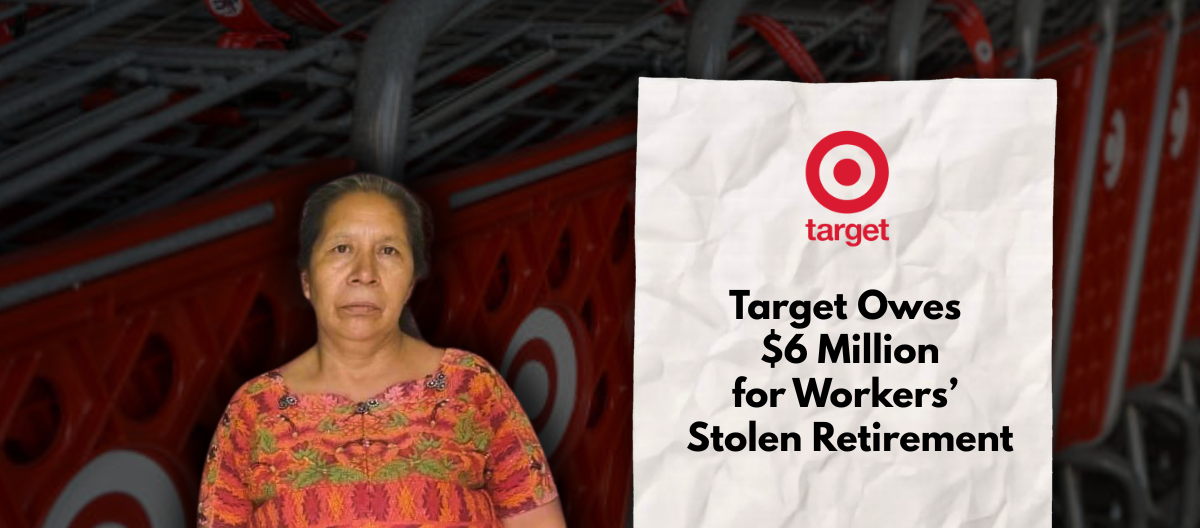
When Target CEO Brian Connell stepped down earlier this year amid massive consumer boycotts, he scored a $21.8 million pay package. But, despite having the funds to pay out tens of millions of dollars to one individual, the retail giant is refusing to act to ensure that 750 workers receive the retirement benefits they earned in their many years sewing for Target. This case is the conclusion of a decades-long struggle by the workers of the KOA Modas factory in Guatemala. It’s a case so egregious that a report by the independent investigative body Worker Rights Consortium (WRC) concludes, “There is often a gap between the stated labor rights commitments of apparel brands and retailers and their actions in practice. There is rarely a gap as cavernous as the one Target has demonstrated at KOA Modas.”
Target’s Supplier Had a Long History of Abuses
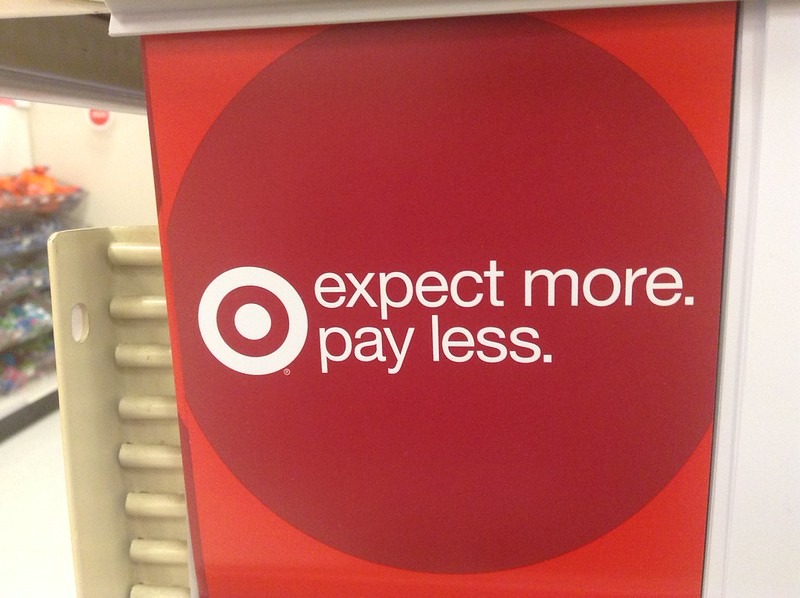
The word “sweatshop” dates back to the Industrial Revolution. For over a century, fashion manufacturing jobs have been synonymous with long hours, low wages, and grueling production quotas. But even in this industry, KOA Modas stands out for the factory’s long, extremely well-documented history of exploitation. By the time the factory closed in February 2025, a decades-long paper trail established a long history of systematic violations of workers’ rights. At that time, Target Corporation was the factory’s only buyer, sourcing t-shirts, skirts, and other items for Target’s private-label brands. Target has built its brand on the promise, “Expect More. Pay Less,” hawking t-shirts for as little as $4. And those cost savings were squeezed out of workers.
One KOA Modas worker described the back-breaking pace of the work, “We were asked to make some 300 t-shirts an hour, but I never managed to…I’m old, I could only get to 150, 175 t-shirts maybe, and the managers were always coming after me.” Surveying a rack of t-shirts, she told a CNN reporter, “It would take me days to afford what is on offer here.”
It wasn’t just the low wages that left workers struggling. There is a decades-long history of wage theft and abuse that subsidized Target’s low prices. These violations at KOA Modas were publicly documented in reports by the U.S. Trade Representative, the International Labour Organization, and U.S.-based non-profit advocacy groups. When workers organized a union, KOA Modas management campaigned to discredit and undermine the union, leading to the firing of 13 union leaders, one of whom was assaulted and received death threats. After suffering such abuses for decades, workers were left impoverished. But Target’s supplier’s greed wasn’t done.
When KOA Modas Closed, Outstanding Pay Obligations Totaled $12 Million
When the factory closed in February 2025, it owed a total of approximately $12 million in severance pay, stolen wages, stolen social security payments, and penalties. After an investigation and engagement by the Worker Rights Consortium (WRC), Target’s intermediary, SAE-A Global Trading, ensured that workers were paid nearly $6 million for their severance and back wages. It speaks to just how outrageous the misconduct at KOA Modas was that just half the theft amounted to “the largest amount of back pay ever secured for garment workers at a single factory in Central America,” according to the WRC.
But, after having spent their working lives being stolen from by Target’s supplier, Target is about to rob these workers of a peaceful retirement too. As KOA Modas was exploiting workers daily, it was also robbing them of their future by deducting social security payments from workers’ paychecks but never actually depositing them into the central government-administered social security fund. An in-depth analysis of records and worker testimonies by the WRC shows the systematic nature of this theft–and the long paper trail of the KOA Modas Workers’ Union (SITRAKOAMODASAC) repeatedly raising the issue with Target and with local government officials. The workers’ representatives first wrote to Target in 2013 about its supplier’s misconduct. Workers have evidence that this theft had been ongoing since 1998–so, almost the entire life of the average Target shopper.
Over the years, workers contacted Target at least 6 times about these ongoing violations. In addition, in 2017, the WRC first contacted Target about this case, calling on it to address the violations of both the law and Target’s own supplier code of conduct.
At last, in 2022, nearly a decade after workers first contacted the company, Target acknowledged its responsibility and showed worker representatives a five-point remediation plan to address the years of social security theft. The only problem is that the plan was never properly implemented. When the factory closed in 2025, the total owed to remediate this theft came close to $6 million.
Target Chooses Secrecy Over Human Rights Commitments
In the year leading up to the factory’s closure, the WRC was in contact with Target over its investigation into abuses at the factory and the ongoing unpaid social security funds. And, after the factory closed, the WRC continued to engage with Target to ensure that the workers who had spent their lives working for Target’s lawless supplier would finally get what they were owed.
These workers’ decades-long saga was so very close to getting resolved. And then, a final plot twist. Target agreed that it would pay the necessary legal fees to ensure workers could still collect their social security–but only if it were kept a secret.
We’ve written over and over about the issues with secret investigations and confidential reports: they let brands cover up the consequences of their purchasing practices, and leave workers without transparency or accountability for harms that have been done. The WRC has a policy that “requires transparent public reporting of [its] investigations and their outcomes,” but Target refused to budge.
As of June 2, 2026, Target refused a plan in which they would have needed to pay just $50,000 to address the $6 million in stolen pension funds from the workers who sewed Target’s clothes. It’s a staggering choice. Target benefited for decades from KOA Modas management’s many wage and retirement theft schemes. In the end, Target has not contested that this theft happened. Indeed, it was willing to pay–just so long as the process was kept a secret.
This is Not the First Time We’ve Called on Target to Pay Workers
Workers have been severely impacted by this theft. Approximately 60-70% of the workers who sewed for Target in the KOA Modas factory are women. Many of them worked at the factory for decades. They speak of the heavy physical toll of the labor on their bodies, and how hard it is even for young people to keep up with the grueling production quotas. Women speak matter-of-factly about age discrimination and the blacklisting they face for having been members of the union: the odds that they can find more work to support themselves and the family members who depend on them are slim. One woman who sewed at the factory for 24 years summed up her experience:
“Aside from feeling frustrated and sad, I am getting used to the idea that in 10 years I still won’t be able to collect my pension. It’s like someone entering my house and stealing my piggy bank and taking all my life savings. It makes me feel like dying… I feel like I’ve been stabbed, because I thought I had savings for old age, but that has been thrown in the trash. The company stole this from me, they robbed me.”
While KOA Modas was outrageous in its lawlessness, unfortunately, factory closures and misconduct leave garment workers high and dry far too frequently. It’s even happened at another Guatemalan factory that sewed for Target. Alongside Target retail workers and other advocates, we campaigned to ensure that workers who sewed for Target at the JNB Global factory were ultimately paid what they were owed. Target resolved that case just over three years ago–and now we’re back again.
Pay Your Workers: A Systemic Solution to a Systemic Problem
As a first step, Target needs to ensure that the former KOA Modas workers are able to retire in peace. But there’s also a systemic solution to this systemic problem. From natural disasters to the global COVID-19 pandemic to unpredictable tariff hikes, workers at the bottom of the supply chain too often pay the price.
The Pay Your Workers proposal would create a severance guarantee fund, as well as organizing protections for workers in garment supply chains. The framework of this binding, enforceable agreement is aligned with international human rights guidelines. Brand signatories would contribute a small sum to ensure that workers are not forced to carry the risks of the global supply chain on their shoulders alone – or rely on international pressure campaigns to win what they are legally entitled to. These repeat cases in Target’s supply chain make clear that it’s high time the retail giant take preemptive action–workers can’t keep paying the price.
Conclusion
Target was informed about the wage and social security theft at its KOA Modas factory numerous times over the years. Yet while the factory was open, Target kept buying. When the factory closed, the total sum owed came to nearly $12 million–half of which has already been resolved without Target’s participation. Target already committed to make things right and ensure that the workers who sewed its clothes, many of whom labored in the factory for over two decades, can have a peaceful retirement. But then Target backpedaled, choosing secrecy over its obligations to the workers who sewed its clothes.
We contacted Target about this case, but so far we have not received any response.
When asked what message she wanted to send, one woman who worked in the factory for 26 ½ years put it simply: “My hope is that Target will support us so that we can retire and be able to survive and be able to go to the doctor when we get sick.” After decades of grueling labor and theft, it’s high time Target addresses the legacy of abuses at the KOA Modas factory and ensures workers get the retirement pay they earned.