Exploring the Power and Potential of Co-Governance in Public Education
By Liz Sullivan-Yuknis and Philippa Rizopoulos
For decades, young people, parents, educators, and communities have organized to build power and transform public education. Co-governance – community and government working together to design and implement policy using shared decision-making power – is one strategy that a growing number of community organizations are using.
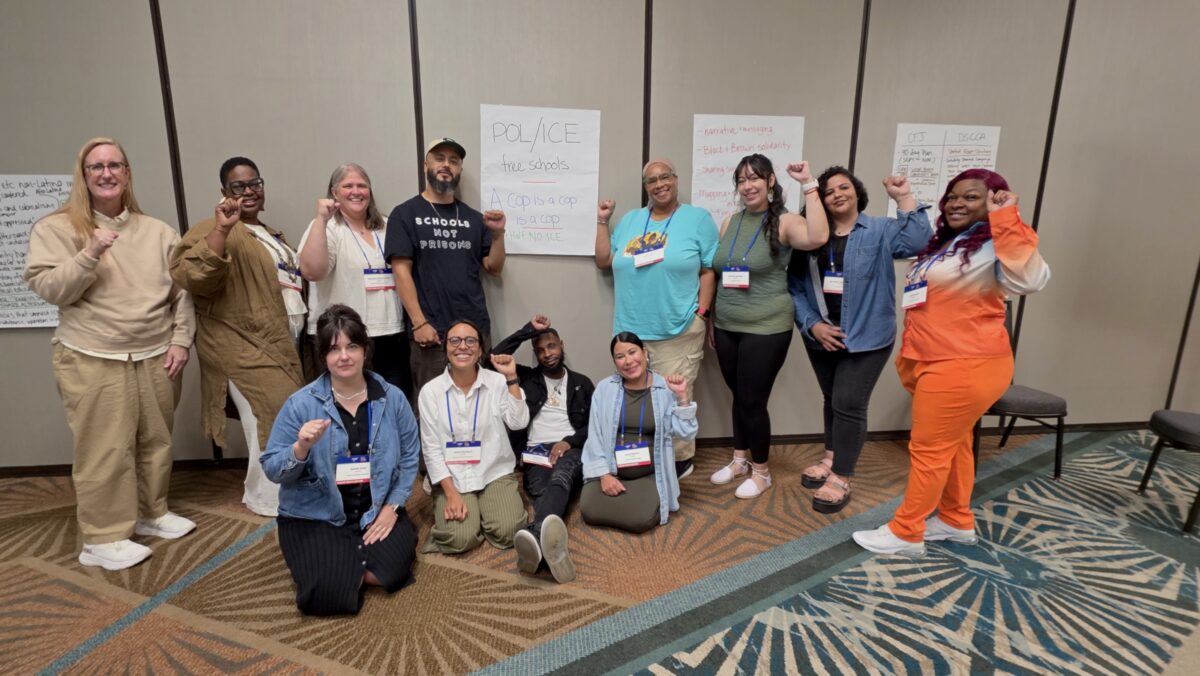
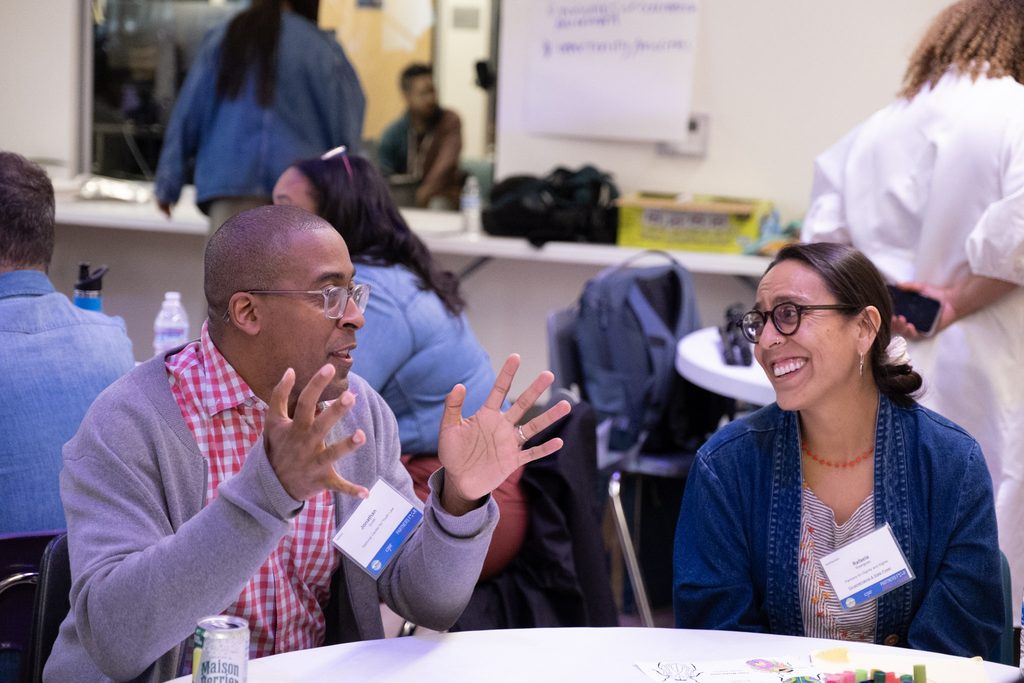
Partners for Dignity & Rights is supporting a learning cohort of five youth and education justice- focused groups from across the country hosted by the Communities for Just Schools Fund (CJSF) to explore the intersection of co-governance and building state-wide power. As part of that work, we traveled to Oakland, California, in May and Raleigh, North Carolina, in September, where the cohort engaged in conversations about the strengths and challenges of co-governance as a strategy for change in public education.
Watch a video from the convening
Strengthening Public Education Through Co-Governance
Co-governance in public education can take many forms, from community and school district collaboration around restorative justice in Paterson, New Jersey, to community schools in Los Angeles and around the country. Public school systems can offer an opportunity for communities to share decision-making power and by doing so, strengthen the quality of and investment in local schools. In Paterson, the community worked with their district to move away from an out-of-control disciplinary system and introduce restorative practices, helping build a school environment that enabled students to thrive.
In Los Angeles, the district, the community, and the teachers’ union worked through years of conflict and distrust to build a community schools initiative that shared genuine decision-making power between all stakeholders, through both a steering committee that oversaw the initiative and on-site committees at each school. By rejecting the traditional top-down approach to school decision-making, each school has been better able to create curricula that engage students, as well as meeting their social, emotional, and economic needs.
Our Education Justice Cohort Grapples with Questions of State Power
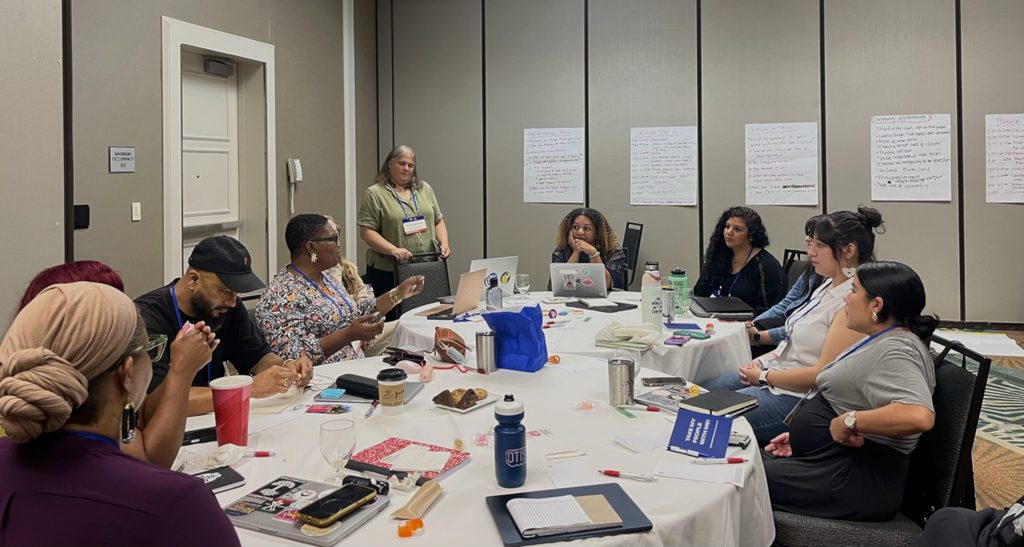
The learning cohort that we gathered with in Oakland and Raleigh is made up of organizations across four states who are exploring co-governance – Californians for Justice and Dignity in Schools Campaign-California, Movimiento Poder in Colorado, Baltimore Algebra Project in Maryland, and Education Justice Alliance in North Carolina.
Together we identified some of the key elements that are part of successful co-governance. What structures facilitate engagement between community and government systems? What does shared decision-making look like? How do we formalize agreements for how community and government work together? How do we build trust and meaningful relationships? What funding is required to ensure there is capacity for co-governance? How do we scale up and out?
Through our conversations, we discussed both the potential and the challenges of co-governance. We talked about wicked problems – the knotty, ever-changing problems we face in our public school systems – and how co-governance is often best suited to those situations, because government cannot solve difficult problems without the on-the-ground knowledge and expertise of the community, and communities can benefit from the resources, infrastructure, and expertise of government.
We also explored key issues facing our youth today and how we can use co-governance to build systems to support them and help them thrive. Some of the conversation centered around specific goals, including building movement-wide coalitions that are inclusive of labor to strengthen our efforts; addressing the continued threat of ICE to our youth and their families; getting school resource officers (SROs) out of schools; and thinking about how to build a narrative that connects ICE, the police, and SROs.
Leadership and Insights from Grassroots Organizers
One goal of our communities of practice is for cohort members to learn from each other, be inspired, and implement tangible wins. As part of that work, we were able to participate in a workshop organized by Communities United in Chicago on their work to win the Whole School Safety Framework that replaces traditional policing with holistic, supportive, and community-driven safety strategies – a huge win for their community, and one that was aided by their co-governance strategies. Our cohort members asked questions of their peers, learned details about the effort it took to win, and will bring that knowledge back to their communities.
Several key insights emerged in our conversations:
- Community investment and readiness are essential to engage in co-governance;
- The people most impacted by knotty problems must be at the center of developing solutions;
- Changing government policy and implementation requires understanding the structures and sources of power driving government decisions;
- Narrative and community buy-in are key so that people are ready to embrace transformation.
Throughout both convenings, we recognized that co-governance, like many other strategies, requires specific conditions and context to succeed. Engaging in it requires a clear-eyed assessment of inherent tensions, including:
- Demanding shared decision-making power from systems that were never designed to share it;
- Asking how we can move systems toward genuine collaboration and avoid slipping into “community input” that government entities can ignore and disregard at will.
Our cohort members are intent on creating transformational change in public education–and they are part of a broad movement across the country. Co-governance can play an important role in that strategy by creating conditions in which real decision-making power is shared. The ultimate goal is to reimagine systems, strengthen communities, and build schools where young people can thrive.